
How Clutter Affects Anxiety and Stress Levels
The science behind why your space affects how you feel, and what to do about it.
Have you ever walked into a cluttered room and felt immediate stress? You’re not imagining things. The connection between a disorganized environment and elevated anxiety is real, documented and more significant than most people realize.
We tend to think of clutter as a purely aesthetic problem, something that looks bad but does not really affect us beyond appearances. The state of our physical environment has a direct, measurable impact on our nervous system, our cortisol levels, our ability to focus and our overall mental health.
In this post, we are going to walk through exactly what is happening in your brain and body when you live with clutter, why some people are more affected than others and what you can do, starting today, to begin reducing the anxiety that a disordered environment creates.
What Clutter Does to Your Brain
Your brain processes visual information involuntarily and constantly. Every object in your environment is registered, catalogued and assessed, whether you are aware of it or not. In a cluttered space, the volume of the visual stimuli your brain is processing significantly increases and doesn’t stop just because you want to relax.
Physical clutter competes for your attention and reduces your brain's ability to process information and focus. This competition for cognitive resources is exhausting, it is why you can feel tired simply from being in a disorganized space, even if you have not done anything physically demanding.
Beyond focus and fatigue, clutter activates what researchers call a stress response. Your brain interprets an overwhelming, disorganized environment as a kind of threat, something that needs to be managed, resolved or escaped. This triggers the release of cortisol, your body's primary stress hormone, which contributes to feelings of anxiety, irritability and overwhelm.
The Cortisol Connection
Cortisol is your body's primary stress hormone, designed to help you respond to genuine threats and challenges. In short bursts, cortisol is useful and necessary. But chronically elevated cortisol, the kind that comes from ongoing environmental stressors like persistent clutter, is associated with a wide range of negative health outcomes, including disrupted sleep, impaired immune function, difficulty regulating emotions, weight gain and increased risk of anxiety and depression.
A landmark study published in the journal Personality and Social Psychology Bulletin found that women who described their homes as cluttered or unfinished had higher cortisol levels throughout the day than women who described their homes as restful and restorative. The clutter was not just stressful in the moment, it was producing a sustained physiological stress response over the course of each day.
The stress of clutter is not something you can simply think your way out of or decide not to feel. It is happening in your body whether you want it to or not. The most effective intervention is not changing your mindset about clutter, it is changing the clutter itself.

Why Some People Are More Affected Than Others
Not everyone experiences clutter-related stress to the same degree. Understanding why can help you approach your own relationship with your environment with more compassion and less judgment. Several factors influence how significantly clutter affects an individual's stress levels.
People who live with various mood disorders sensory processing sensitivities tend to experience clutter-related stress more intensely. For someone with anxiety, a cluttered space can feel actively threatening rather than merely uncomfortable. For someone with ADHD, clutter creates a level of visual distraction that can make focus nearly impossible. For someone managing depression, the accumulated mess can feel like evidence of failure, compounding the mental health struggle rather than merely reflecting it.
Life circumstances also play a significant role. During high-stress periods (a job transition, a difficult relationship, a major loss, a health challenge) clutter that once felt manageable can suddenly feel impossible. The mental resources we normally use to manage our environment get redirected to managing the crisis, leaving the home to deteriorate. This is not a character flaw. It is a predictable, human response to an overwhelming situation.
Practical Steps to Reduce Clutter-Related Anxiety
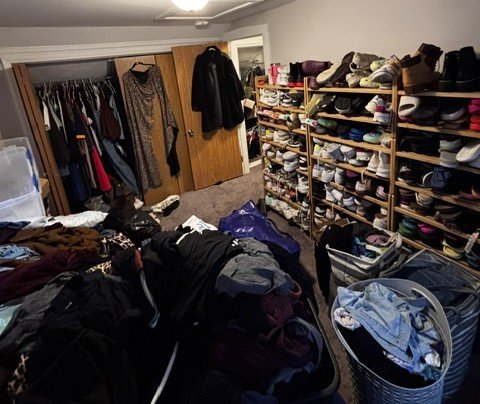
Here’s the good news: you do not have to transform your entire home to begin reducing the anxiety that clutter creates. Small, targeted improvements in your physical space produce measurable reductions in stress. The key is starting with the spaces that impact you most.
Identify your highest-stress clutter zones: the spaces that consistently make you feel tense, anxious or overwhelmed when you enter them. For many people, this is the bedroom, the kitchen counter or the home office. These are the spaces to prioritize first. Clearing them delivers the greatest mental health return on the time and energy invested.
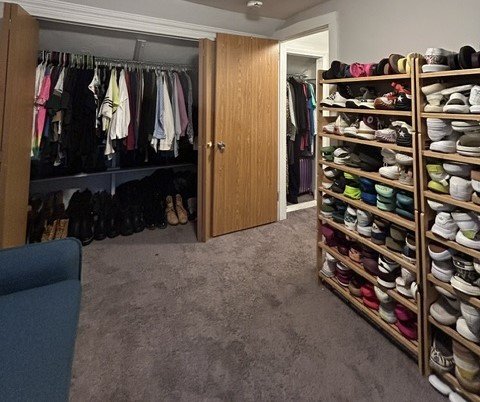
Start with surface clearing, the fastest, most visually impactful form of decluttering. Clear one surface completely. Wipe it down. Step back and notice how the space feels. That shift in your nervous system is real, immediate and worth paying attention to. Build from that win, one surface at a time, until the spaces that were causing you the most anxiety begin to feel genuinely calm.
Your Space Is Not Separate from Your Mental Health
The relationship between clutter and anxiety is not a personality quirk or a sign of weakness. It is biology. It is psychology. It is the very human reality that the spaces we inhabit have a profound and ongoing influence on how we feel, how we think and how we move through the world.
At SloanyCo, we believe that addressing your physical space is one of the most direct and effective things you can do for your mental health. The moment a space begins to clear, something shifts: you breathe deeper and mind quiets. Finally, your nervous system has the signal that you are safe, you are in control and everything is going to be okay.
Ready to address the anxiety your space has been carrying? Visit sloanyco.com to learn more about our mental health-focused organizing services and book your free consultation with SloanyCo today.
