
Your Environment Impacts Your Sleep
Most conversations about sleep focus on habits: no screens before bed, keep a consistent schedule, avoid caffeine after noon. While those things matter, there is a piece of the sleep puzzle that often gets overlooked entirely: the physical space where you sleep.
Your bedroom environment has a direct impact on your ability to fall asleep, stay asleep and wake up feeling rested. Clutter, visual noise, disorganization and even the layout of your furniture all send signals to your nervous system. And when those signals say "this space is unsettled," your body has a harder time settling too.
What Your Brain Does in a Cluttered Bedroom
Your brain is always scanning your environment, even when you are trying to rest. In a cluttered bedroom, it picks up on unfinished business. The pile of laundry that needs sorting. The stack of things on the nightstand with no real home. The closet door you keep closed because opening it feels like too much.
Each one of these cues registers as an unresolved task. And unresolved tasks are one of the things your brain works hardest to hold onto. When you lie down at night surrounded by visual reminders of things that need attention, your mind has a harder time shifting into the quiet, restful state that sleep requires.
The Bedroom as a Signal
Your body is incredibly responsive to environmental signals. Light, temperature, sound and visual input all play a role in how your nervous system reads a space. A bedroom that feels calm and intentional sends a signal that it is safe to rest. A bedroom that feels chaotic or overwhelming sends a very different message.
This is why our sleep matters. Your bedroom should be a space your body associates with rest and restoration, not with the unfinished business of the rest of your life. When clutter and disorganization blur that boundary, the space stops doing its job.
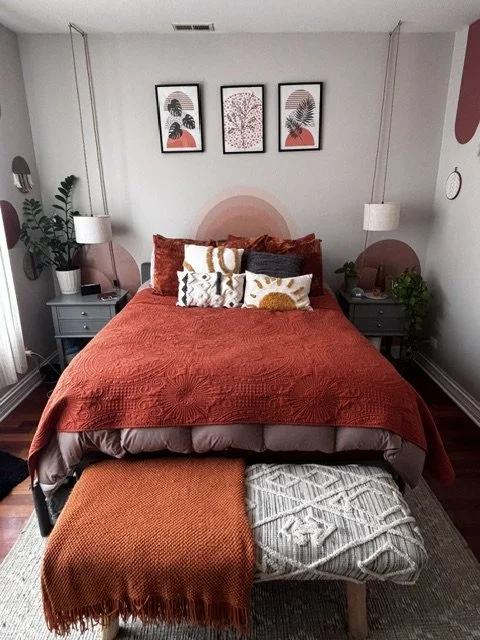
Pictured: My Bedroom. I don’t just talk the talk, I walk the walk.
Small Changes That Make a Real Difference
You do not have to overhaul your entire bedroom to feel the difference. Here are a few places to start:
Your Nightstand: The surface closest to where you sleep has an outsized effect on how your brain reads the room. A cluttered nightstand keeps unfinished business right at eye level. A clear one creates a small but real pocket of calm.
Your Floor: Clothes, bags, and random items on the bedroom floor create low-level visual noise that is hard to escape when you are lying down. Even gathering things into one organized spot can shift the feel of the room.
Your Closet: A closet stuffed to the point of chaos sends stress signals every time you open it, and sometimes even when you do not. A basic sorting session, keeping only what you regularly use visible and accessible, can change the energy of the whole room.
Horizontal Surfaces: Dressers, shelves, and window sills that are covered in objects give your eyes nowhere to rest. Choose a few things that are meaningful or functional and clear the rest.
This Is Not About Perfection
A calmer sleep environment does not mean you need to have a magazine-perfect bedroom. It means a space where you can breathe, the visual input is gentle instead of demanding and where your body gets the signal that it is okay to let go for the night.
If your bedroom has felt more like a storage room than a sanctuary, you are not alone. Life piles up and decisions get deferred. The bedroom often takes the hit because it is the most private space in the home, the one we think no one else will see.
But you see it. You live in it every night. And you deserve to sleep in a space that is actually on your side.
Where to Start Tonight
Pick one small thing. Just one. Clear your nightstand, pick up what is on the floor, or move one pile somewhere it actually belongs. You are not solving everything tonight. You are just making the room a little more yours.
Sleep is not a luxury, it is a foundational pillar of your health. Your environment is either supporting it or quietly working against it so let's make it work for you.
Ready to reclaim the sleep your space has been costing you? Visit sloanyco.com to learn more about our mental health-focused organizing services and book your free consultation with SloanyCo today.
